

3 WAVES INTEGRATIVE MEDICINE
Chiropractic, Acupuncture, & Shockwave in Berkeley, CA
HOLISTIC SPINE AND ORTHOPEDIC INJURY AND WELLNESS CARE
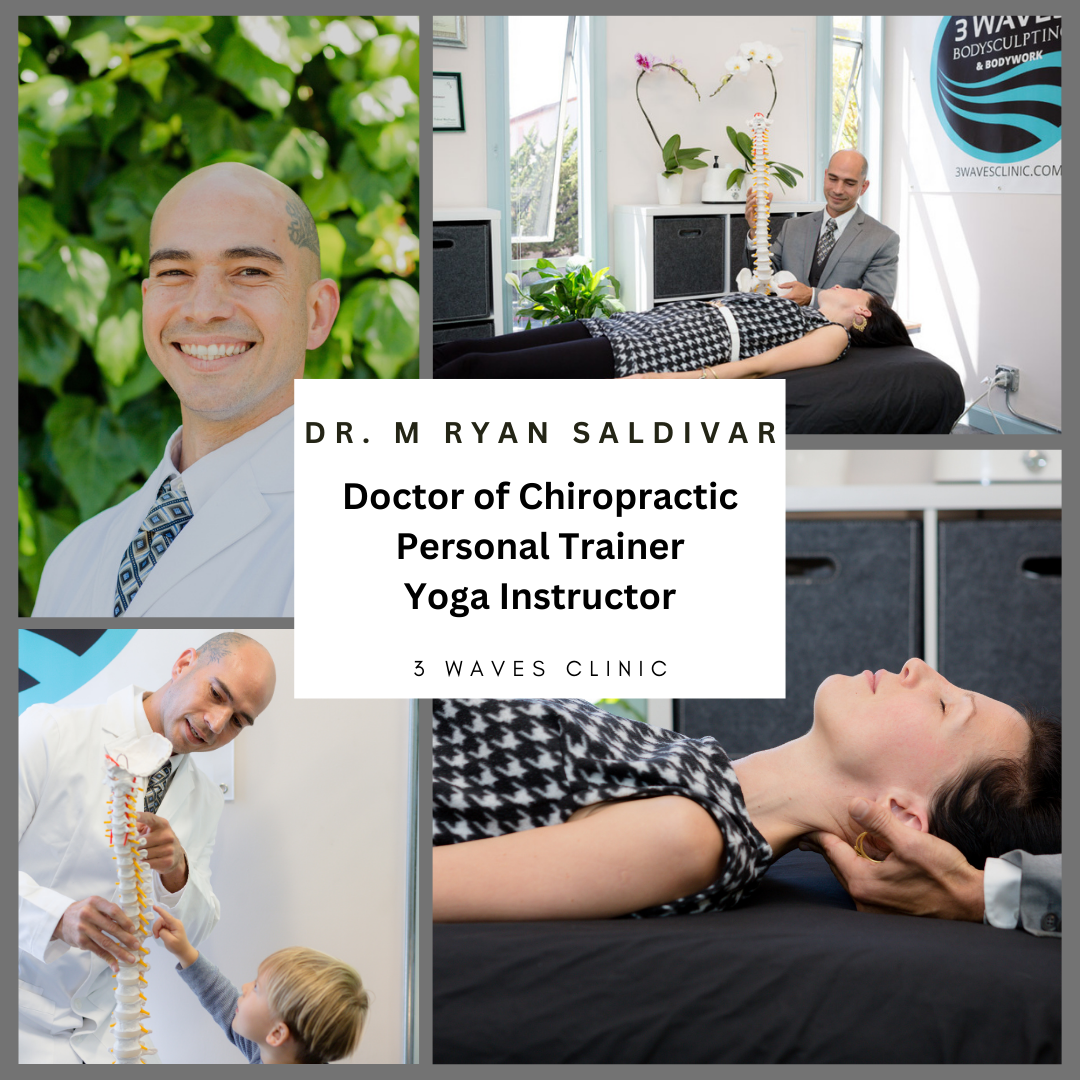
Dr. M Ryan Saldivar D.C.
“At the age of 16 years old I had 3 waves fracture my spine in five places.
By receiving Chiropractic & Orthopedic Massage, and studying targeted exercise I avoided spinal surgery.
At the age of 18 I attended Massage Therapy School and Yoga Teacher Training, and started helping other people recover from debilitating back pain.
This is why the clinic is called “3 Waves Clinic.” The spinal trauma that I endured led me to a lifetime of study of how to help other people.
Before achieving my Doctor of Chiropractic degree, I had already helped over 20,000 people, and I now combine Chiropractic care with the modalities that I learned in my decades of experience.
It is my goal to help people stay athletic through as much of their lifespan as possible, because studies show that regular exercise, a healthy diet, and deep regular sleep is a critical combination to maintain a healthy brain later in life.
In this way the care we offer helps people to live longer, happier, healthier lives.”
FAQs
-
Dr. M. Ryan Saldivar, D.C. is a Doctor of Chiropractic with over 20 years of clinical experience. Chiropractic is a highly specialized discipline focused on the precise adjustment of the spine and joints to restore function, reduce pain, and activate the body's innate healing capacity.
At the core of chiropractic care is the relationship between spinal alignment and the nervous system. Misalignments — known as subluxations — create interference in the nerve pathways that govern movement, sensation, and overall health. Through targeted spinal and joint adjustments, Dr. Saldivar removes that interference, restoring range of motion and allowing the body to heal from the inside out.
Unlike conventional approaches that rely on medication to mask symptoms, chiropractic care addresses the root cause of pain — giving your body the structural and neurological foundation it needs to recover and thrive.
-
Dr. Saldivar's path to chiropractic began early. At 18, he completed massage therapy school and yoga teacher training — developing a hands-on understanding of the body that most clinicians never receive. He then completed a four-year apprenticeship under a prominent sports chiropractor, during which he worked with athletes from the San Francisco 49ers, Oakland Raiders, Golden State Warriors, and Oakland A's.
He went on to earn a Bachelor of Science in Pre-Medicine with a concentration in Integrative Medicine, deepening his understanding of how chiropractic and acupuncture work alongside conventional medicine for optimal patient outcomes. He then completed his Doctor of Chiropractic degree, passed the National Board Examination in Physical Therapy, and earned certification as a Personal Trainer.
Dr. Saldivar is currently completing a four-year Diplomate program in Gonstead Chiropractic Technique — one of the most precise and respected adjusting methods in the profession.
Chiropractic adjusting is a highly skilled clinical intervention. It requires years of specialized training and should only be performed by a licensed, board-certified professional.
-
Most people come to chiropractic care seeking relief from neck, mid-back, or lower back pain. Chiropractic adjustments are applied directly to the vertebrae and are one of the fastest, most effective ways to reduce spinal pain — without medication or surgery.
Back pain can stem from car accidents, slips and falls, and sports injuries. In today's technology-driven world, it just as often results from hours spent at a desk, hunched over a screen. Regardless of the cause, when the spine is under stress, inflammation begins to accumulate in the surrounding muscles, tendons, ligaments, and intervertebral discs. That inflammation compresses the sensory nerves that exit the spine, producing pain — which then triggers muscular tension and spasm.
This is known as the pain-spasm cycle. Spasm creates additional pressure on the spine, which drives more inflammation, which causes more pain, which produces more tension. Left unaddressed, the cycle compounds and becomes increasingly difficult to break.
Chiropractic adjustments interrupt this cycle at its source. By restoring proper alignment and mobility to the vertebrae, adjustments allow inflammation to drain from the surrounding soft tissue — providing fast, meaningful relief and setting the stage for lasting recovery.
Beyond pain relief, regular chiropractic care restores the spine's natural mobility and stability, preserving range of motion that tends to diminish with age and inactivity. Many patients report improved sleep and significant reduction in tension headaches following cervical adjustments. The body simply functions better when the spine is aligned.
The most effective approach is preventive. Coming in before the pain-spasm cycle takes hold means shorter recovery times and less discomfort overall. Most patients maintain a regular schedule — weekly, twice monthly, or once a month — to prevent degenerative changes, reduce chronic tension, and sustain a higher quality of life.
-
Chiropractic care carries minimal risk of serious complications. Some patients experience mild soreness following their first adjustment — a normal response as the body releases inflammatory gases from previously immobilized vertebrae. This discomfort is temporary and typically resolves within a day or two.
To put chiropractic safety in perspective: in the United States, millions of people are hospitalized each year due to adverse reactions to prescription drugs, and more than 250,000 deaths annually are attributed to surgical errors. Chiropractic offers a clinically effective, drug-free, and surgery-free approach to spinal care with a fraction of that risk.
This is particularly relevant in the context of the opioid crisis. Prescription pain medications — while sometimes necessary — carry serious risks of dependency and overdose. Chiropractic care addresses the structural source of pain rather than chemically suppressing it, making it one of the most responsible alternatives available for patients managing chronic spinal conditions.
The research supports this safety record clearly. A study published in the National Library of Medicine examined Medicare Part B patients between the ages of 66 and 99 — among the highest-risk population for stroke — and found the risk of serious adverse events following spinal manipulation to be between 0.05 and 1.46 per 10,000,000 adjustments. That is an exceptionally low risk profile by any clinical standard.
Source: "Risk of Stroke Following Chiropractic Spinal Manipulation in Medicare B Beneficiaries Aged 66–99 Years With Neck Pain" — National Library of Medicine, February 2006
-
Self-adjusting the spine is not recommended and can cause harm over time. Spinal adjustments should only be performed by a licensed Doctor of Chiropractic.
What most people don't realize when they "crack" their own neck or back is that they are rarely — if ever — correcting the actual problem. Subluxations, the misalignments that cause dysfunction and pain, are typically located below the segment that pops when someone attempts to self-adjust. The relief felt is often just joint cavitation — the release of gas from a hypermobile segment — not a therapeutic correction.
Two common examples illustrate the risk. The first is pushing the chin forcefully into the chest until the neck pops. In many people, this movement further reverses the cervical spine's natural curve — a condition that can only be identified through X-ray. Repeatedly doing this accelerates the loss of that curve and leads to significant long-term consequences, including chronic pain and accelerated degeneration.
The second is gripping the chin and rotating the neck until it pops. This is one of the most common — and most dangerous — habits people develop. Forceful uncontrolled rotation of the upper cervical spine carries real risk, including stress to the vertebral arteries.
One of the reasons chiropractic adjustments carry such a low risk of serious adverse events is precisely because licensed chiropractors are trained to minimize rotation of the upper cervical spine during neck adjustments. That training takes years to develop and cannot be replicated by self-manipulation.
Over time, repeated self-adjusting creates hypermobility in the upper cervical spine. The body's response to instability is to stabilize — and it does so through the early onset of arthritis and progressive loss of mobility. What begins as a habit meant to find relief becomes a source of lasting structural damage.
If your spine feels like it needs to be adjusted, that's a signal to see a professional — not to force it yourself.
-
Chiropractic care is one of the most cost-effective options available for spinal and musculoskeletal conditions. Compared to prescription medications, injections, and surgery, the cost of regular chiropractic treatment is modest — and the return on that investment is significant.
Without intervention, chronic back and neck pain often leads to missed work, reduced productivity, and in more serious cases, disability leave. Addressing the structural cause of pain early is almost always less expensive — and far less disruptive — than managing the long-term consequences of leaving it untreated.
If cost is a concern, we encourage you to reach out. We are happy to work with you to build a care plan that fits your schedule, your goals, and your budget — so that financial considerations never stand between you and living pain-free.
-
Headaches can arise from many sources — hormonal imbalances, food sensitivities, environmental triggers, and stress among them. Chiropractic care is particularly effective for headaches that originate in the spine and nervous system, which represent a significant portion of the headaches people experience daily.
Tension headaches are caused by chronic tension in the neck and shoulders. The combination of orthopedic bodywork and chiropractic adjustment is highly effective for this type — releasing the muscular tension that drives the headache while restoring proper cervical alignment.
Cervicogenic headaches originate from subluxation and tension in the cervical spine. Targeted adjustments improve blood flow to the brain and reduce pressure on the surrounding nerves, providing relief from the characteristic one-sided pain often felt behind the eye or along one side of the head.
Migraines are more complex in origin and remain an active area of research. Triggers vary widely, and the full biochemical picture is still being understood. That said, clinical experience consistently shows that migraine sufferers respond well to regular chiropractic care. Spinal adjustments reduce cortisol accumulation, improve cerebral blood flow, and support healthy vagal tone — the parasympathetic nervous system's ability to regulate stress responses. For many migraine patients, this combination of effects can be genuinely life-changing.
If you suffer from frequent headaches of any kind, chiropractic care is worth exploring as a first-line, drug-free option.
-
The frequency of care depends on several factors: the severity of your condition, how long you have been experiencing it, and your history with chiropractic treatment. Every patient is different, and your care plan will be tailored accordingly.
Corrective care is the first phase of treatment. The goal here is to reduce pain, address the underlying dysfunction, and begin restoring proper spinal alignment. This phase typically involves more frequent visits — sometimes a few times per week in the early weeks — gradually tapering as the adjustments begin to hold and the spine stabilizes.
Maintenance care is the second phase, and for many patients it becomes a lifelong practice. Once the pain is resolved and alignment is restored, regular adjustments — weekly, twice monthly, or once a month depending on your lifestyle and individual needs — help sustain those results. Think of it as routine upkeep for your spine: proactive rather than reactive, and one of the most effective things you can do to stay active, mobile, and pain-free as you age.
Most patients find that consistent maintenance care not only prevents the return of old symptoms but improves their overall quality of life in ways they didn't anticipate — better sleep, less tension, more energy, and greater resilience to the physical demands of daily living.